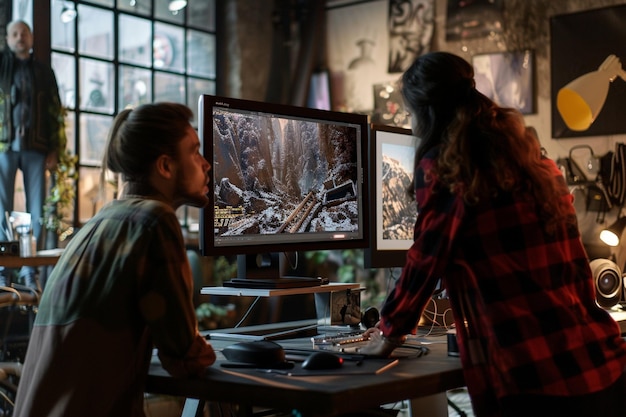
Make Your Messages Move
Discover how motion graphics can transform your brand communication, capturing attention and conveying ideas that stick with your audience.
Back to HomeWhat You'll Gain From This Course
Through this eight-week program, you'll develop the ability to create motion graphics that engage audiences and communicate brand messages effectively. Whether you're working on social media content, explainer videos, or brand presentations, you'll learn to make information visually compelling.
You'll gain confidence using After Effects—the industry standard for motion graphics production. More than just learning the software, you'll understand the principles that make motion graphics work: timing that creates impact, design that maintains clarity, and movement that guides attention.
By the program's end, you'll have created portfolio pieces that demonstrate your range: kinetic typography that brings words to life, logo animations that establish brand identity, social media content optimized for different platforms, and explainer videos that make complex ideas clear.
This course is designed for designers wanting to add motion to their skillset and marketers seeking to create more engaging content. You'll learn to think in terms of time and motion, expanding your creative toolkit in ways that immediately apply to real-world projects.
You've Noticed Something Missing
You've seen how motion graphics capture attention on social media, how animated logos make brands memorable, how explainer videos simplify complex messages. Static designs feel limited when you know movement could make your ideas more engaging.
But creating effective motion graphics involves more than adding transitions to images. There's timing to consider, pacing that maintains interest, design choices that work in motion rather than fighting against it.
Maybe you've tried learning After Effects through tutorials, but found yourself overwhelmed by the interface or unsure how to translate techniques into your own projects. Without understanding the underlying principles, it's easy to create movement that feels arbitrary rather than purposeful.
If you're in marketing or design, you might feel pressure to produce animated content but lack the skills to create it efficiently. Or perhaps you're creating motion graphics already but want to work faster, develop templates that scale, and understand the professional workflows that make production manageable.
These challenges are natural when you're bridging the gap between static design and motion. The shift requires not just new software skills, but a different way of thinking about visual communication.
A Practical Approach to Motion Graphics
Our Motion Graphics for Marketing course focuses on the skills that matter most for brand communication and content creation. You'll start with fundamental motion design principles—understanding how timing affects perception, how movement directs attention, and how animation can clarify or confuse messages.
We teach After Effects as a creative tool rather than just a technical one. You'll learn to work with shape layers, masks, and effects while understanding when and why to use each approach. The emphasis is on developing judgment about what serves your message best.
The program covers the types of projects you'll actually create: kinetic typography for emphasis and engagement, logo animations that establish brand presence, social media content formatted for various platforms, and explainer videos that communicate ideas clearly.
Throughout the eight weeks, you'll work with real-world constraints—client brief simulations, platform specifications, brand consistency requirements. This practical focus helps you develop not just creative skills, but production efficiency.
You'll also learn to create templates and systems that make motion graphics production scalable. This is especially valuable if you're producing content regularly—understanding how to build flexible assets saves significant time while maintaining quality and consistency.
Your Learning Experience
Each week combines concept demonstrations with hands-on project work. You'll see techniques explained in context, then apply them to assignments that mirror real marketing and brand communication needs.
Early sessions focus on fundamentals: creating smooth animations, understanding easing and timing, working with typography in motion. These basics become the foundation for everything else you'll create.
As you progress, you'll tackle increasingly complex projects. You might design a logo animation sequence, create social media content for a mock campaign, or develop an explainer video that communicates a specific message. Each project builds on previous skills while introducing new techniques.
The course includes training on expressions and plugins that speed up workflow, audio synchronization for impact, and strategies for optimizing render times. These practical skills make a real difference when you're working under deadlines.
Instructors provide feedback during work sessions, helping you refine both your creative choices and technical execution. You'll also see how other students approach similar challenges, which often sparks new ideas for your own work. By the final weeks, you'll have developed a portfolio of motion graphics that demonstrate your capabilities to potential clients or employers.
Course Investment
This investment provides focused training in professional motion graphics creation:
What's Included
- Eight weeks of focused instruction and studio access
- Comprehensive After Effects training and workflow techniques
- Guidance from instructors with commercial production experience
- Workstations with professional software and plugin access
- Client brief simulations and real-world project scenarios
- Portfolio development and template creation strategies
Practical Applications
- Create engaging social media content that captures attention
- Develop brand assets that strengthen visual identity
- Produce explainer videos that communicate ideas clearly
- Build reusable templates for efficient content production
The skills you develop here translate directly into work that engages audiences and supports brand communication across digital platforms.
How Skills Develop
Our teaching approach for motion graphics emphasizes practical application. We've found that skills develop most effectively when students work on projects that mirror real-world requirements—deadlines, brand guidelines, platform specifications.
The eight-week structure balances learning new techniques with developing production efficiency. You'll create multiple projects throughout the program, each one building on previous work while introducing new challenges.
Progress shows in both the quality of your work and the speed at which you can produce it. Early assignments might take significant time as you learn the software and principles. By the end, you'll work more efficiently, making intentional creative choices rather than experimenting with every option.
Your pace may vary based on previous design experience, but the structured approach helps everyone develop core competencies.
A Focused Learning Environment
We want you to feel confident about this decision. If within the first two weeks you find that this course doesn't align with your expectations or needs, we'll work with you to address your concerns.
Our commitment is to provide practical instruction that helps you create motion graphics effectively. You'll have access to experienced instructors who understand both the creative and production aspects of motion design.
Before enrolling, you're welcome to discuss the curriculum in detail, ask about specific techniques you want to learn, and understand what the course covers. We'd rather you have clear expectations than feel uncertain about the commitment.
Motion graphics skills develop through practice and application. We provide the instruction, tools, and project structure. Your progress depends on the effort you invest in learning and applying these techniques.
Getting Started
Starting is straightforward. Contact us through the form with questions about the motion graphics program. We'll respond with specific information about what the course covers and how it might fit your goals.
If you'd like to visit the studio, see the workspace, and discuss your specific interests in motion graphics, we can arrange that. Many students find this helpful for understanding what to expect.
Once you're ready to enroll, we'll guide you through registration and provide information about the session start date and what to prepare for your first week.
The Process
Send us your questions
Tell us about your interest in motion graphics and what you hope to achieve.
We'll provide details
Expect a response within one business day with course information.
Decide if it's right for you
Consider whether this aligns with your creative or professional goals.
Begin creating
Start developing skills that enhance your communication capabilities.
Let's Talk About Your Motion Graphics Needs
Whether you're looking to enhance your design skills or improve your brand communication, we're here to answer your questions.
Get in TouchOther Learning Paths
2D Animation Fundamentals
Master traditional animation principles and create character-driven stories through expressive movement and timing.
Learn about 2D animation →
3D Animation and Modeling
Build immersive three-dimensional worlds and characters using professional software and industry workflows.
Learn about 3D animation →